We recently caught up with one of our 33kV Cable Jointers, Harry Branthwaite, who is currently working on one of our projects at Hams Hall (BESS), to find out a bit more about what it’s like to be a cable jointer.
Over the past two years with IES, Harry has worked across the length and breadth of the UK, from the south-west coast of Scotland down to London. Travel plays a big part in the role and was one of the key factors that drew him into the industry.
“This job feels like there’s always something new to learn or try,” Harry explains. “From terminating cables to testing and commissioning, no two days are ever the same. Precision and teamwork are key, but it’s incredibly satisfying at the end of the day.”
With such a vast and interconnected power network, reliability is essential and that responsibility sits heavily on the quality of every installation.
“The network is huge, and everyone relies on it,” Harry says. “It’s imperative that installations and joints are done right to minimise any failures.”
At the core of the role is an understanding that every connection matters.
“Every joint and termination is a potential weak spot within the system, so it’s our job to install it like it isn’t there.”
Cable jointers play a vital role in connecting energy infrastructure, linking the grid to wind farms, both onshore and offshore, as well as maintaining underground connections. As the industry continues to evolve, the demand is growing, not just for new installations but also upgrading the existing systems to install newer more reliable ones to last longer.
At the moment, Harry is part of the team working at Hams Hall (BESS), delivering specialist 33kV cable installation, termination and testing works.
“A typical day at Hams Hall — there’s a lot going on,” he says. “We’ve got a full team on site testing cables, carrying out terminations, and making sure everything is completed to a high standard.”
The scale of the project adds another level of complexity. “The job involves hundreds of HV terminations from skid to skid, cable pulling into the switchroom, testing and phasing before termination, and then VLF testing after installation before energisation.”
It’s a fast-moving environment where attention to detail is constant and critical.
Precision is at the core of a cable jointer’s skillset, and consistency is non-negotiable.
“Every time you carry out a joint, you’ve got to double-check your work,” he explains. “Make sure nothing has been missed and that all your measurements are exactly right.”
Accuracy is one of the most critical factors in ensuring reliability. “All your measurements have to align with the manufacturer’s instructions and design. If they’re wrong, the layers won’t line up properly, and that can massively impact the termination.”
Different cable types also demand different approaches. “With XLPE, it’s all about cleanliness and accuracy — it’s a modern plastic cable. But with older PILC cables, your main focus is keeping moisture out. If water gets into that type of cable, it can cause serious damage.”
On large or complex projects, maintaining consistency becomes even more challenging. “It’s harder than people think,” Harry admits. “That’s why it’s important to have your team around you checking over your work — making sure everything meets the standards and manufacturer’s instructions.”
Moving across the different voltages there are different challenges and complexities that come with each of them.
“HV work is both physical and technical,” he explains. “You’re working with large cables — sometimes up to 800sqmm — bending them into tight spaces. It can be demanding.”
But EHV introduces an entirely new level of precision.
“It’s a much longer and more detailed process, with absolutely no room for errors. It takes a lot of time, dedication, and focus.”
The working environment itself also becomes more controlled.
“With EHV, you need a much larger, cleaner workspace where nothing can interfere with the process. It’s like you can’t take your eyes off the cable.”
Even the simplest tasks require more attention.
“There feels like an extra step in everything you do compared to lower voltages and the level of accuracy needed is on another level.”
While the technical skills are critical, Harry is quick to point out the personal qualities that make the biggest difference on site.
“One thing I didn’t expect when I started was how much my communication skills would develop,” he says. “You’ve got to be clear and vocal so everyone’s on the same page — that awareness across the team is crucial.”
For those considering a career as a cable jointer, the role requires a mix of mindset and practical skill.
“A lot of patience and precision is needed, and you need belief in what you’re doing because it can get very technical,” Harry explains. “But more than anything, it’s about teamwork.”
“This job is never something you do on your own. Being able to communicate and work closely with the people around you is key.”
From remote coastlines to cutting-edge offshore substations, Brendan McNally’s career has taken him far beyond what he first imagined when studying civil engineering at Salford University. Now Brendan is Operations Director for UK and Europe at IES Utility Solutions. Brendan plays a pivotal role in delivering high-voltage (HV) and extra-high-voltage (EHV) projects mainly working across HV offshore projects on sites in Scotland, Holland and Ireland.
“I didn’t always know I’d end up in the power industry,” Brendan admits. “I actually wanted to be a firefighter. But I found my way into engineering, and what really hooked me was the variety. You get to see the world and be part of something meaningful.”
We caught up with Brendan to find out a little bit more about his role and some of his personal highlights over the years.
Brendan’s work is anything but routine. His role spans the full lifecycle of HV projects, from being involved in the planning and pricing through to the installation, testing and delivery. “Every aspect of the job comes through you at some point,” he explains. “Programming, jointing, purchasing — start to finish.”
On offshore projects, the day begins early and runs long. Crew transfer vessels (CTVs), helicopters, and jack-up vessels are all part of the commute.
“A typical day is a 12-hour shift — 7am to 7pm, or nights,” he says. “You might be heading out by boat or helicopter to an offshore substation platform or turbine. Every day is different depending on where you’re working.”
Despite the technical intensity of the role, it’s the lifestyle that can be one of the toughest challenges the teams face.
“The hardest part is being away from home and the long hours. You miss events, plans — things change quickly, and you have to adapt.”
Still, Brendan comes prepared to everyday. “My heated gilet is a must-have on site, it’s the best thing ever,” he laughs.
Working on HV and EHV systems demands absolute accuracy and technical discipline — something Brendan thrives on.
“If I had to describe the job in three words: precise, demanding, and interesting.”
Much of that precision comes down to the tools and technology used in the field. One standout piece of equipment has transformed how his teams operate:
“We use a Unipower peeling tool. It connects to a drill and strips the core insulation layer on XLPE cable. What used to be done by hand, now takes a fraction of the time — it’s a real game changer.”
Other innovations have helped reduce the physical strain of the job.
“Electric crimpers and hydraulic presses take a lot of the manual effort out of jointing. That makes a big difference when you’re working long hours.”
Digital tools have also reshaped the way teams collaborate offshore and across regions, making communication much easier. Sharing data, updates and test results in real-time.
Among the many projects Brendan has delivered, one recent highlight stands out:
“The Redmoss–Clayhills 132kV city cable project has been a big one — 18 double circuit joint bays, fibre splicing, four sets of terminations. We’re just coming into the final stage now, and it’s been a great achievement.”
Brendan has worked in some of the most unusual and challenging environments in the world — including Sakhalin Island in Russia.
“That was probably the most remote place I’ve ever worked. It took three days to get there from the UK. We were jointing cables for a gas processing plant, miles from anywhere.”
Closer to home, he enjoys large-scale collaborative projects, especially those involving offshore infrastructure.
“Working in Hoboken, Belgium, installing MV and HV cables on offshore platforms was a great experience. Big teams, complex builds — that’s when the job really comes together.”
His favourite projects? The most demanding ones. “I prefer working on the EHV projects — 132kV and 220kV. They require more precision and attention to detail. That’s what makes them interesting.”
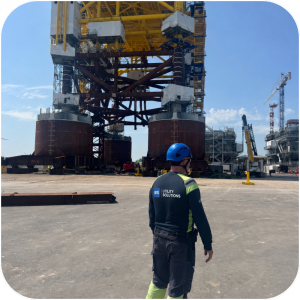 Working Offshore vs Onshore
Conditions offshore and onshore bring very different challenges. “Offshore, the weather can turn quickly, especially if you’re out on the OSS cable deck,” Brendan says. “But a lot of the time, you’re working inside turbines or switch rooms where it’s warm and controlled.”
However, Onshore wind farms can be tougher in many ways. “They can be cold, wet, exposed conditions. Offshore can actually be easier depending on where you’re stationed.”
They say that every day is a school day and that’s something that Brendan still firmly believes in. “I’ve learnt that you’re always learning. Despite all the years of experience, listening to your colleagues’ ideas and suggestions always have a positive outcome for the job.” That mindset has shaped his approach to leadership and teamwork, where collaboration is critical on complex HV installations.
For Brendan, the future of the industry is one of rapid transformation — and opportunity.
“What excites me most is the pace of change,” he says. “We’re seeing huge advancements in renewables — wind, solar, tidal — making energy cleaner and more accessible.”
He points to several key developments that will define the sector in years to come:
“It’s all moving in the right direction. The work we’re doing now is laying the foundations for a much more sustainable energy system.”
Brendan’s career has been shaped by simple but powerful principles.
“The best advice I’ve ever had is: you cannot rush perfection. That applies to everything we do in this industry.”
For those considering a career in engineering, his message is clear:
“Work somewhere you feel happy and valued — you won’t go wrong.”
From remote islands to offshore wind farms, Brendan McNally is helping build the infrastructure powering the energy transition. His story highlights not just the technical expertise behind high-voltage engineering, but the people, dedication, and innovation driving the industry forward.
Our engineers and linespeople on the ground are made stronger by our dedicated training managers. Their experience, support and guidance help shape our workforce, building their confidence to carry out their day-to-day roles. Based at our training school in Manchester, our Trainers are ready to travel across the country to wherever the business needs them.
We caught up with Andy Spence, Overhead Training Manager at IES Utilities, to learn more about his journey into the industry, his experience as a DNO manager, and the role he plays in developing the next generation of OHL operatives.
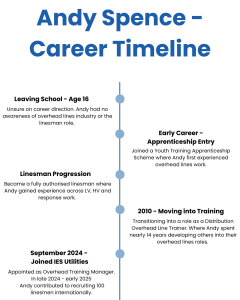
After leaving school at 16, Andy wasn’t sure what career path to take and like many, he had never even heard of the role of a linesman. That changed when he joined a Youth Training Apprenticeship Scheme, where he was first introduced to working on overhead lines.
Andy progressed to become a fully authorised linesman, gaining experience across LV and HV networks and working on response jobs in high-pressure situations where safety and quick decision-making are critical.
In 2010, he moved into training, spending nearly 14 years as a Distribution Overhead Line Trainer. Where he supported both new starters and experienced operatives, helping them build strong foundations and develop a clear understanding of what consistent, high-quality training looks like.
Then in September 2024, Andy joined IES Utilities as an Overhead Training Manager. Within just his second week, he played a key role in a major recruitment drive in Africa. Where over the course of six months and multiple trips, the team successfully recruited more than 100 linesmen, an unprecedented achievement at that scale.
“What stood out most wasn’t just the numbers, but the impact; seeing individuals given opportunities to improve their lives and support their families is something that stays with you.”
 Training, Development and Raising Standards
Today, Andy focuses on delivering in-house overhead line training programmes tailored to operational needs, while also working to improve procedures and equipment to enhance efficiency and safety.
He plays a key role in ensuring the competency of the workforce, making sure all linesmen and women are trained to the highest standards. This includes delivering both practical and theoretical training, as well as refresher courses for experienced operatives.
Because all training is carried out in-house, it can be shaped around real working environments, particularly live working and operating at height.
“No two days are the same. A typical day could involve delivering classroom-based training followed by practical sessions on site, ensuring individuals are ready for real working conditions.”
A large part of Andy’s role is also about being accessible; supporting people, answering questions, and helping to build confidence across the workforce.
“I support both new starters and experienced operatives, ensuring consistency across the workforce. I also work closely with project managers and Health & Safety teams, developing training materials and helping improve understanding of the hazards associated with overhead line work.”
When it comes to helping new employees transition into the business, Andy takes a structured but supportive approach. New starters are guided through a combination of classroom learning and hands-on training, ensuring they understand both the technical and safety aspects of the role from day one and build confidence early on.
“My approach is open and supportive – my door is always open. I encourage people to ask questions and seek help when needed.”
One of Andy’s most rewarding experiences comes from supporting trainees through challenging moments.
“There have been times where trainees have had a wobble and felt they couldn’t carry on. I’ve climbed the overhead to speak with them, helping them settle and rebuild their confidence. Those moments—helping someone get through that point and believe in themselves—are more rewarding than anything that might come later in their career.”
After nearly 38 years in the industry, stepping into a DNO training manager role felt like a natural progression.
“Moving into training has allowed me to pass on my knowledge and support others in developing their own careers.”
His hands-on experience has shaped his approach to leadership and training, allowing him to relate to the challenges faced at every stage of the job.
“Having worked my way up through the industry gives me a clear understanding of what people face. I focus on practical, real-world training and being approachable – it builds trust and encourages open communication. I believe in leading by example, maintaining high standards, and creating a strong safety culture.”
Strong training and competency are essential in the industry. While the role is often perceived as dangerous, Andy emphasises that with the right training, procedures, and mindset, it becomes a highly controlled and safe environment.
“We work live and at height every day, so getting the training right from the start is critical. High standards ensure consistency, safety and confidence across the workforce.”
One of the biggest challenges in his role is keeping pace with growing industry demand.
As new contracts are secured, the need for skilled, competent operatives increases—placing even greater emphasis on effective training programmes and workforce development.
Looking ahead, Andy is passionate about encouraging new talent into the overhead lines industry.
He believes that success in the role comes down to a combination of mindset, resilience and accountability.
Those starting out need a strong work ethic, self-motivation and a safety-first approach. They must also be comfortable working at height and in challenging weather conditions, while understanding their own limits and having the confidence to speak up if something doesn’t feel right.
“If heights and tough conditions don’t faze you, then go for it. It’s a challenging role, but the rewards are there. It’s taken me all over the world, introduced me to great people—and even after nearly 38 years, I still enjoy coming to work.”
At IES Utility Solutions, we’re proud to support grassroots sport and invest in local talent, and last weekend, that commitment was clear to see as Timperley Amateur Boxing Club (TABC) delivered an outstanding performance at the prestigious Manchester Box Cup.
As proud sponsors of the club, it was fantastic to see the team arrive looking sharp and unified in their new kit, representing both TABC and IES Utility Solutions on a respected regional stage.
The club entered five boxers into the competition and came away with an impressive two Box Cup champions. Rocky Smith and Luke Upton both produced exceptional performances to secure gold, showcasing the dedication and talent within the squad.
They were joined by Sonny Davidson, Kenzie Waite and Ali Ahamady, who all represented the club with determination and pride, contributing to a highly successful weekend overall.
Behind the scenes, coaches Mark Davidson, Clark Smith and Ray Davidson provided invaluable guidance and support, helping drive the team’s strong performances across the event.
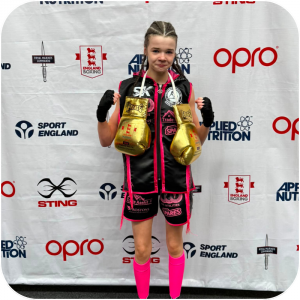
We’re also delighted to celebrate further success from the club, with Savannah Kiely recently crowned England Boxing National Schoolgirls Champion, making her officially number one in the country for her age and weight category. Coach Tony Kiely was ever present by his daughter’s side throughout her preparation for the championship and proudly in her corner on the day, playing a key role in her success.
“As a long-time supporter of Timperley ABC, it’s incredibly rewarding to see the club continue to go from strength to strength. The dedication shown by the boxers, coaches and everyone involved is truly inspiring. At IES Utility Solutions, we believe in supporting our local communities and creating opportunities for young people to thrive. Seeing these athletes succeed on such a respected stage, and knowing we’ve played a small part in that journey, makes us very proud.” Breandan Flynn, CEO
At IES Utility Solutions, we believe in backing ambition, discipline and community spirit. It’s inspiring to see these values reflected in Timperley ABC, and we’re proud to play a part in their ongoing success.
Creating an environment where our colleagues can grow, develop their skills and pursue their ambitions is something we’re incredibly proud to champion at IES Utility Solutions.
Last week marked a significant milestone for three members of our Power division – Concila Ndlovou, Albert Jukwa and Phineas Runganga – who successfully achieved their HV Switching (up to 22kV) and Long Stick qualifications with Scottish Power. These achievements mark an important step as they prepare for their final SAP Stage 3 assessments in the coming months.
Having joined IES in 2024 as linespeople through our South African recruitment programme, each of them has demonstrated exceptional commitment, progressing through hands-on project experience while building a deep understanding of network operations and safety standards.
We caught up with them to hear more about their journeys so far.
Concila Ndlovu
After relocating to the UK, Concila quickly adapted to the demands of a fast-paced operational environment. Starting in surveying and defect identification, she progressed through pole pinning roles before achieving her APSPHV HV Switching Authorisation.
“This is an accomplishment that I’m particularly proud of,” she says. “Joining IES has been one of the most pivotal and rewarding transitions in my career.”
Reflecting on the journey, Concila highlighted the personal growth behind the achievement:
“This has been both a challenging and highly rewarding experience. It’s helped shape me into a resilient and disciplined SAP, with a strong focus on safety, performance and continuous improvement. Each milestone reflects not just my own development, but the strength of the team supporting me.”
Phineas Runganga
Phineas joined IES in late 2024, bringing valuable experience from Zimbabwe. Beginning on a pole pinning project, he quickly demonstrated his capability, catching the attention of Conor O’Neill and the wider team.
Recognising his potential, Phineas was given the opportunity to begin SAP training – an opportunity he was eager to take.
“It was an opportunity I was proud to accept,” he explains. “Since starting my training last year, I’ve been focused on building my knowledge and experience, and I’m now preparing for my SAP authorisation assessment in June. It’s been a great journey of continuous learning and development.”
Albert Jukwa
For Albert, becoming a SAP has always been a clear goal. His journey has combined in-depth technical training with rigorous practical experience, all underpinned by a strong commitment to safety.
“One of the highlights for me has been working through complex switching procedures alongside experienced colleagues,” he says. “It’s really strengthened both my understanding and my confidence.”
Albert also pointed to the importance of safety throughout his training:
“The safety auditing element has been especially valuable. It reinforced just how critical it is to follow safe systems of work. It’s not just about doing the job effectively, but doing it responsibly and safely every time.”
Across all of their journeys, a common theme stands out – dedication, adaptability and a willingness to step outside of comfort zones to achieve meaningful progress.
Their achievements not only reflect their individual commitment, but also the culture at IES – one that actively supports development, recognises potential and invests in the future of its people.
As they head towards their final SAP assessments, they are already demonstrating the qualities that define success in our industry: technical excellence, resilience and an unwavering focus on safety.
We’re incredibly proud of Concila, Phineas and Albert, and we look forward to supporting them as they take the next step in their careers.
At IES, their journeys are just the beginning – a powerful example of what’s possible when ambition meets opportunity.
Last year, one of our specialist HV teams supported the Dunmanway Wind Farm project in Ireland, delivering Irish 110kV cable jointing, terminations and testing for Suir Engineering to enable completion of the ICP‑approved connection.
The project scope included installation of 110kV XLPE cable joints to UK and Irish HV standards, along with joint bay construction and cable preparation.
We delivered straight joints and cross‑bonded configurations to support the long‑distance EHV circuit design, covering all stages from sheath preparation and conductor crimping through to insulation rebuild and stress control.
Full 110kV HV testing was completed, with comprehensive ICP documentation provided to enable Suir Engineering to finalise the connection.
The project involved several notable challenges that shaped our delivery approach:
We applied a structured, quality‑driven approach to the delivery of the high‑voltage jointing works, ensuring compliance, safety and programme certainty throughout.
Despite the complexity of the route and programme, the project was delivered to the highest technical and safety standards, achieving full compliance and a defect‑free handover.
To talk to our project management team:
 Call
Call Email
Email