
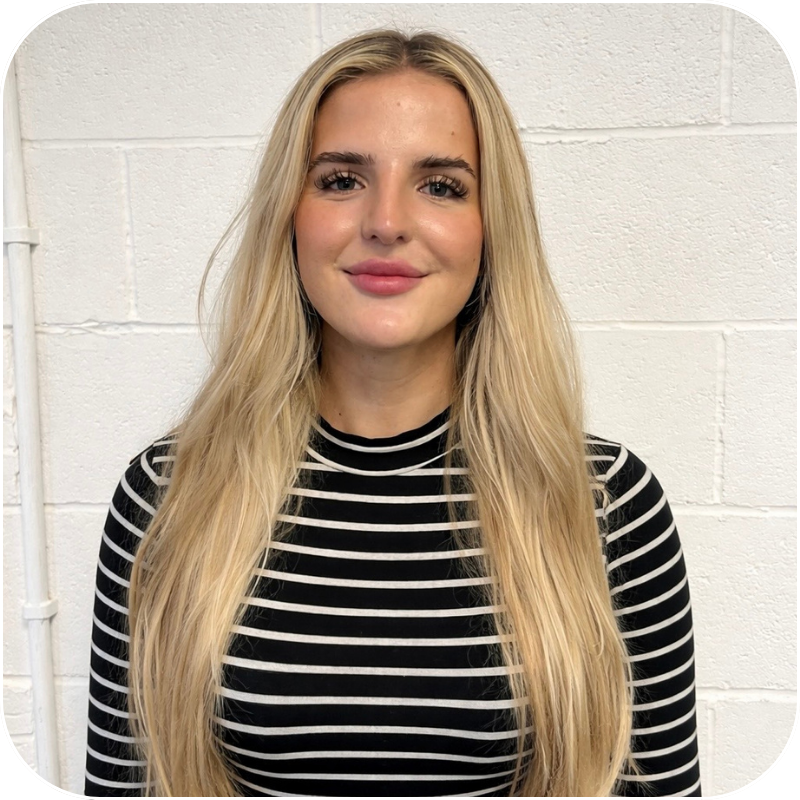
Harriet has been a key member of the IES SHEQ team for nearly 4 years, working as a SHEQ Advisor, mainly across our Gas contracts. Although based at our Head Office in Manchester, Harriet regularly travels across the UK, helping to deliver our projects safely and efficiently.
We caught up with Harriet to hear more about what it’s like to work as a SHEQ Advisor.
“My role is all about supporting project teams to plan and deliver works safely while staying compliant with our procedures and industry regulations,” Harriet explains. “Safety shouldn’t be an add-on, it needs to be built into how the project is designed and delivered.”
Managing Complex Risks in Utilities
Work in utilities brings unique challenges, often involving high-risk environments including live roads, active gas infrastructure and heavy plant operations.
These are some of the key risks that Harriet spends her time helping project teams in understanding and managing these risks on site, with some of the biggest hazards being service strikes, lifting operations, excavations and exposure to hazardous substances. Managing these effectively comes down to thorough planning, close supervision and clear communication on site.
“If something isn’t safe, the work stops. Safety has to come first, always.”
Collaboration at every stage
A large part of Harriet’s day to day role involves reviewing RAMS during the planning stage before validating them on site. Ensuring that real conditions match what’s written on paper. Working closely with project managers, engineers and operational teams to embed safety into design, planning and execution.
“I take a proactive approach, it’s really important that hazards are properly identified and that control measures are realistic and the workers on site fully understand for their own safety as well as those working around them and the public.”
“We often find that site inspections and conversations with operators often reveal additional insights. These open conversations are key as people on the ground can often spot things early that we wouldn’t have been able to predict in the planning process.”
Driving Performance Through Engagement
Harriet monitors safety performance through inspections, audits, incident reporting and weekly reviews with the wider SHEQ team. These processes help the team to identify trends and share their learnings across projects.
But beyond the systems and processes, culture plays a huge part.
“Being approachable and encouraging open conversation makes a big difference in promoting a positive safety culture. I focus on reinforcing that everyone has a role to play in maintaining a safe working environment. Recognising good practice and engaging operatives in discussions about safety helps build confidence across teams and contractors to raise any concerns.”
In her role Harriet supports consistent training for IES staff and subcontractors, from inductions and in house training to regular toolbox talks and specialist courses for high-risk activities such as lifting operations, confined spaces and service detection.
Measuring Success and Incident Prevention
Harriet and the team track a range of KPIs, including near misses, incident rates, observation reporting and corrective action completion, to build a clear picture of project safety performance.
A recent example highlights how proactive controls helped to significantly reduce the risk of underground service strikes: “To prevent and reduce the risk of service strikes, we introduced a trial of different C.A.T (Cable Avoidance Tool) models. This ensured site teams were confident and competent in using the equipment to accurately locate underground services. Enhanced training was also implemented, including EUSR Safe Digging Excavation Practices and EUSR Locate Utility Services (HSG47). Ongoing compliance is monitored through regular site audits and the review of C.A.T download data, providing assurance that the tools are being used correctly and consistently.”
Advice for Future Safety Professionals
For those starting out in health and safety, Harriet emphasises one thing above all: spend time on site.
“Understanding how work is actually carried out is essential,” she says. “Build strong relationships, ask questions and engage with the workforce. That’s how you learn, and it’s how you deliver advice that’s practical and effective.”
We look forward to hearing more from Harriet next time she’s out on site.
To talk to our project management team:
 Call
Call Email
Email