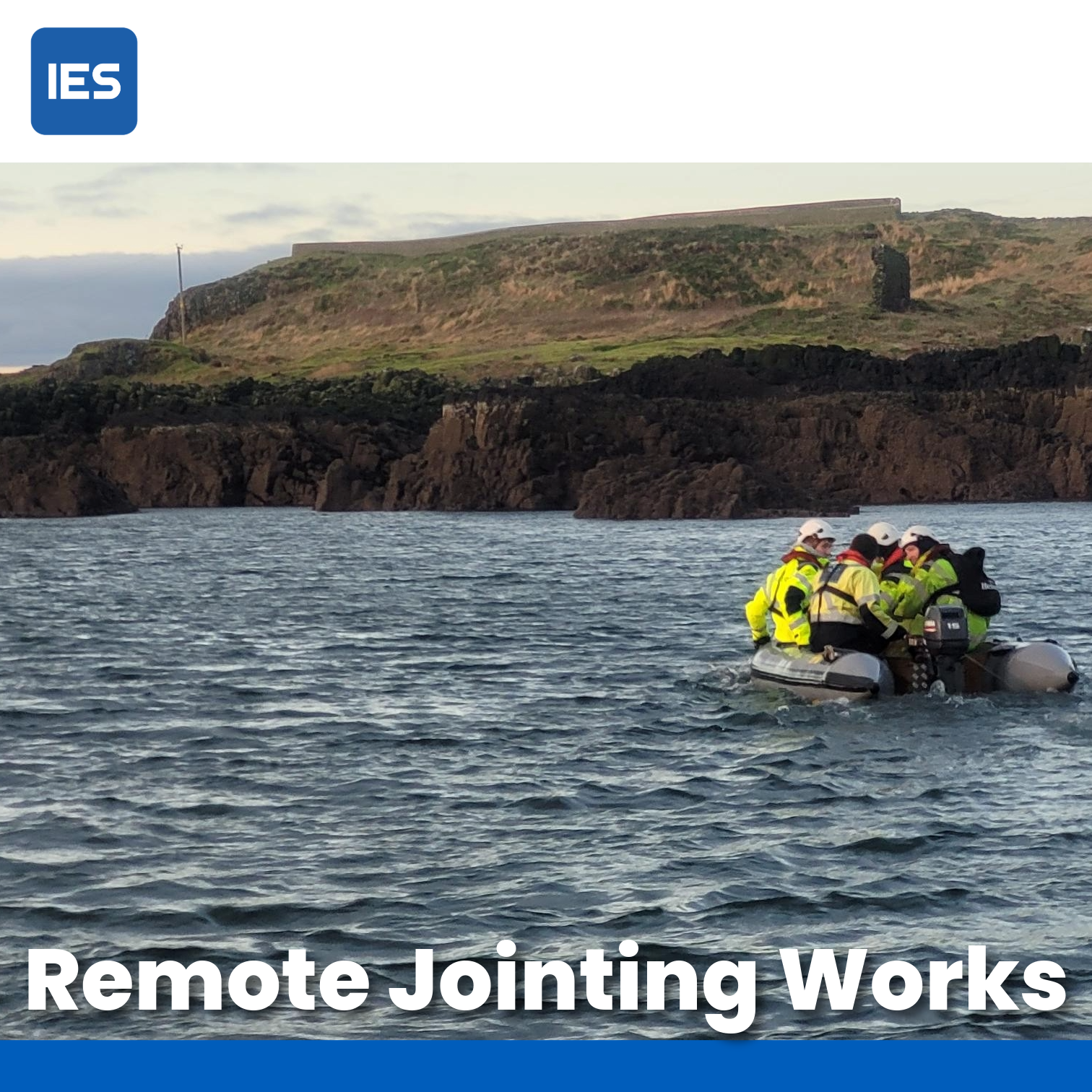
Fidra, a small rocky outcrop off the East Lothian coast, is beautiful, remote, and environmentally precious. It is also tide dependent, meaning every movement of people, tools, and materials must be planned with absolute accuracy. For Scottish Power Renewables, upgrading the electrical infrastructure on such a location required both technical expertise and a deep respect for the island’s protected status — and our teams were ready to rise to the challenge.
A Project Shaped by Its Environment
From the outset, site conditions dictated the pace of work. Access to Fidra was limited by vessel schedules, weather, and tides, meaning each day began with careful planning before the team even reached the island. All equipment, from hand tools to heavy cable sections, had to be manually transported across uneven terrain using certified lifting aids, as no vehicles were permitted.
As a Special Protection Area and SSSI, Fidra required heightened environmental discipline. The team worked with strict vigilance, employing spill kits, drip trays, controlled waste systems, and a firm ‘leave no trace’ approach to protect the sensitive ecosystem. Every action was carried out with minimal impact in mind.
Delivering High Voltage Expertise in Low Margin Conditions
On arrival, the team completed site induction, verified certifications, and established safe access and controlled work zones. Jointing works were carried out in line with manufacturer requirements and HV best practice – from cable preparation and sheath removal to screen management, crimping, heat‑shrink application, and final terminations. All activities were overseen by SPEN Senior Authorised Personnel to ensure strict compliance with safety documentation, isolation protocols, and permit controls. Despite the challenging environment, the team delivered the installation with accuracy and professionalism, with the Lead Jointer completing final inspections on each joint.
Safety at the Heart of Every Decision
Safety remained central throughout the project. Daily toolbox talks, continuous supervision, and strict controls addressed risks related to HV work, manual handling, uneven terrain, and the use of heat‑shrink materials and propane. PPE, COSHH‑assessed materials, and clear emergency procedures were embedded in all activities.
This disciplined approach delivered the project’s key outcome: zero incidents, accidents, or near misses.
Protecting a Unique Island — Every Step of the Way
Environmental stewardship was treated with the same importance as technical delivery. All waste generated from the jointing process was collected, secured, and transported off the island for proper disposal. Fuel handling was tightly controlled. Spill response equipment was kept close at hand at all times — though, thanks to careful working practices, it was never needed. The team left the island exactly as they found it.
A Successful Outcome in a Demanding Setting
Despite tight tide windows, sensitive habitats, challenging terrain, and strict safety controls, the team delivered the full 11kV jointing programme safely, on schedule, and to specification. The Scottish Power Renewables project manager praised the team’s professionalism and their ability to complete complex HV works with minimal impact on the island’s fragile environment.
Demonstrating Capability Where It Matters Most
The Fidra Island project stands as a testament to the team’s capability to execute complex HV jointing works in some of the UK’s most remote and environmentally sensitive locations. It showcases not just technical skill, but a culture of safety, environmental care, and thoughtful planning.
Tackling difficult logistics under tight environmental constraints is never easy, but on Fidra Island, our teams proved that with the right expertise and commitment, even the most challenging locations can host successful, safe, and sustainable infrastructure upgrades.
To talk to our project management team call 0161 791 1496
or email info@iesutilities.co.uk